Avoiding the most common Altersvorsorgedepot mistakes

Published on · Updated on · Managing Director & Partner, Alsterspree Verlag GmbH
This article was written by an author with the support of AI.
Into the AVD safely and with legal certainty
A free, no-obligation conversation with an adviser from our independent network of 1,000+ vetted advisers.
The new Altersvorsorgedepot: a milestone with potential pitfalls
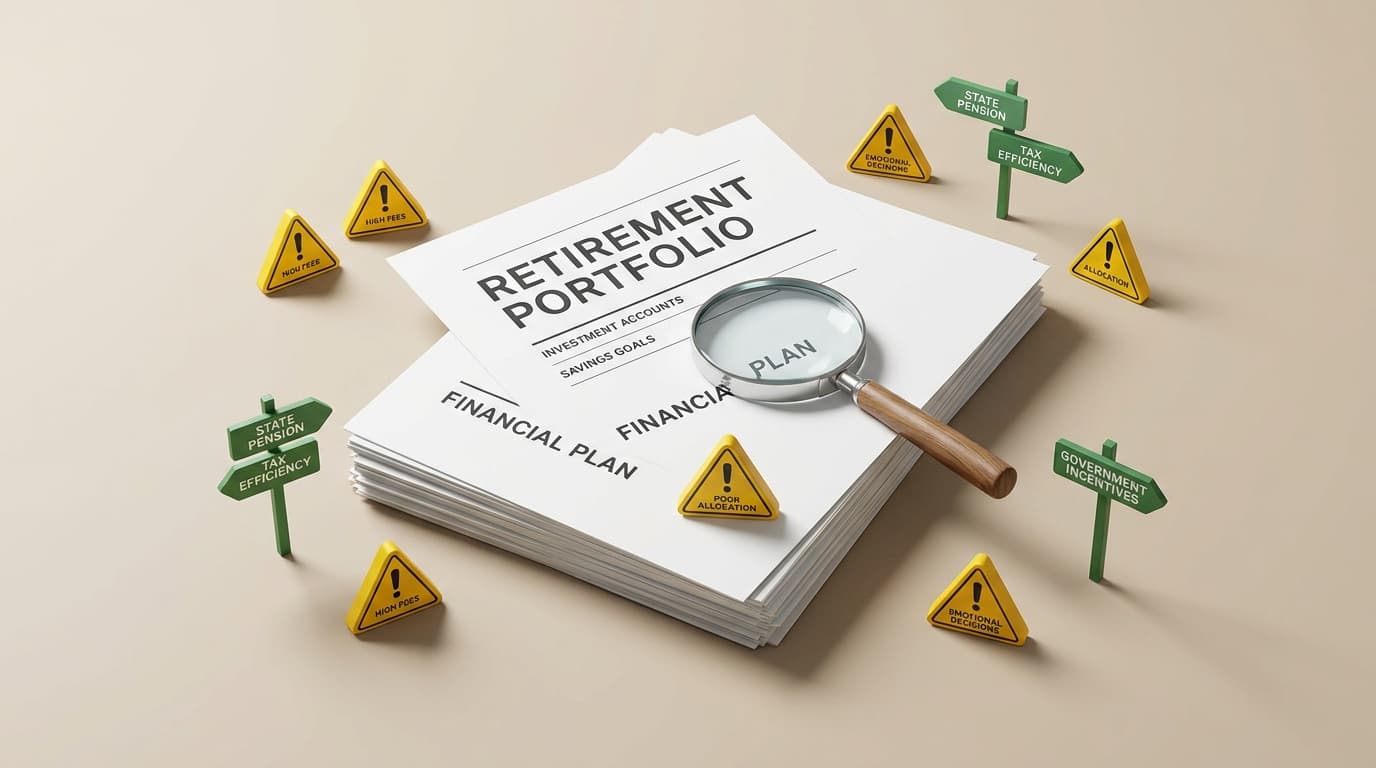
The most common Altersvorsorgedepot mistakes cost real money: choosing a provider that is too expensive, missing the minimum own contribution and losing allowances as a result, cancelling the contract early in a way that forfeits the subsidy, running a share allocation that doesn't fit the remaining term, or simply never applying for the allowance at all. The new Altersvorsorgedepot launches on 1 January 2027 as the modern successor to the Riester-Rente (Germany's existing subsidised private pension)[1]. This state-subsidised reform gives you markedly more flexible return potential through an independent ETF investment with no fixed contribution guarantees. But where rigid safeguards are no longer mandated, your personal responsibility increases substantially. Misjudge the risks of the capital markets or ignore your plan's terms, and you put your accumulated savings directly at risk. To get the most out of the state subsidy and your returns from day one, you should systematically rule out the classic traps.
This new flexibility means you have to take control of your own asset allocation and account fees. Whether you decide to manage your own account as a confident self-directed investor or prefer personal advice, either path gets you there, as long as you avoid costly mistakes. Our knowledge section gives you source-based, fully neutral analysis and guidance on this. If you would like tailored support from a licensed expert, our independent advice service connects you directly with the right partner. And if you would rather model the exact subsidy effect for your own case, our subsidy calculator is available free of charge at any time.
- Provider and plan choice: high account fees significantly erode your compound-interest effect over the decades.
- Missing the minimum own contribution: pay in less than the statutory minimum of 120 euros a year and you risk losing the state allowances.
- Early cancellation: an unplanned, subsidy-forfeiting termination triggers repayment of all state benefits already received.
- The wrong share allocation: a rigid or ill-suited risk weighting destroys return potential, or exposes your capital to excessive swings just before retirement.
- Forgetting to apply for the allowance: many savers give up state benefits because they fail to submit the required allowance application in time.
Mistake 1: missing the minimum own contribution of 120 euros a year
To make full use of the state subsidy for the new Altersvorsorgedepot from 2027, you must pay the statutory minimum own contribution of 120 euros per calendar year. Fall short of this fixed amount by even a single cent, and your entitlement to every state allowance for that year lapses completely, with no partial payment[1]. This rigid floor - the equivalent of just 10 euros a month - is one of the most important levers of the new pension reform. It serves as the absolute entry ticket to the state subsidy system.
Compared with the existing Riester-Rente, the legislature has structurally simplified the system, but that raises the risk for inattentive savers. Under Riester, the base amount was 60 euros a year, and falling short of it usually only led to a proportional cut in the state allowances. Under the new Altersvorsorgedepot, the minimum own contribution of 120 euros applies uniformly to everyone eligible for support as a hard cliff edge. Fail to clear this hurdle and you lose the entire subsidy outright. There is no pro-rata payout for contributions below this threshold.
| Criterion | Former Riester-Rente | Altersvorsorgedepot (from 2027) |
|---|---|---|
| Absolute minimum contribution | 60 euros a year | 120 euros a year |
| Requirement for allowances | Complex (4% of the previous year's income) | Simple (at least 120 euros own contribution) |
| Consequence of a shortfall | Proportional reduction of the allowances | Complete loss of all allowances |
Self-employed people and savers with irregular income in particular need to track their annual payments meticulously. Because freelancers and the self-employed become directly eligible for the subsidy for the first time from 2027[1], they lose the automatic handling via an employer. A standing order of at least 10 euros a month set up in advance reliably prevents a missed payment. Use our subsidy calculator to work out your personal subsidy precisely. You'll also find comprehensive background information and legal detail in the neutral knowledge section, which guides you step by step through the new pensions landscape.
Mistake 2: forgetting to apply for the allowance and missing out on the Grundzulage
Anyone saving into the new Altersvorsorgedepot from 2027 receives substantial state contributions. But these do not land in the account fully automatically. Many savers give away real money every year because they fail to apply for the Grundzulage of up to 540 euros, or the Kinderzulage of up to 300 euros per child, or get the application wrong. To receive the full state subsidy, you as the saver have to take action yourself. The new subsidy system provides a Grundzulage made up of 50 percent of the first 360 euros plus a further 25 percent of contributions up to 1,800 euros, reaching a maximum of 540 euros[1].
| Type of support | Maximum amount from 2027 | Basis of calculation |
|---|---|---|
| Grundzulage | Up to 540 euros | 50% on contributions up to 360 euros plus 25% on contributions up to 1,800 euros |
| Kinderzulage | Up to 300 euros | Matched 1:1 for each child entitled to Kindergeld (the German child benefit) |
| Berufseinsteiger-Bonus (the career-starter bonus) | A one-off 200 euros | For savers under 25 when they open their Altersvorsorgedepot contract |
Note on the calculations: all subsidy amounts and allowance figures stated are for illustration only, based on the enacted pension reform act (Altersvorsorgereformgesetz). Not investment advice within the meaning of § 1 Abs. 1a Nr. 1a KWG.
A standing allowance application protects you from missed deadlines
A classic mistake is trying to apply for the state subsidy manually, from scratch, every single year. This process is error-prone and easy to forget in daily life. The safest solution is to set up a standing allowance application directly with your provider. With this one-off authorisation, the account provider applies for the allowances on your behalf, fully automatically. It is important, though, to have the application updated whenever your circumstances change - the birth of a child, marriage, or a change in income. For precise planning of your individual allowance entitlements and own contributions, it is worth consulting the knowledge section or running the numbers through the subsidy calculator.
Mistake 3: choosing a provider that is too expensive and eroding your return advantage
The new Altersvorsorgedepot offers an attractive state subsidy from 2027, but the wrong choice of provider can seriously erode your net return. The statutory standard product is subject to a cost cap of a maximum 1.0 percent in effective costs per year[2], yet this seemingly tiny amount adds up to substantial losses over a multi-decade term[3]. Sign up without a careful comparison, and you give away a meaningful share of your compound-interest effect to avoidable administration costs. In our knowledge section we give you comprehensive, source-based information on these cost structures and show you how to make the best use of the legal framework for building your wealth.
Comparing traditional insurers with neobrokers
Traditional life insurers and branch banks often price their products close to the statutory limit of 1.0 percent. Modern neobrokers, by contrast, often forgo expensive set-up and distribution commissions and offer Altersvorsorgedepots with estimated effective costs of just 0.2 to 0.4 percent. For investors who want to close their pension gap digitally and independently, that translates into a noticeable financial advantage. Anyone who would rather have personal support and a tailored solution can use our independent advice service to find the right neutral expert for a no-obligation initial conversation, with no hassle.
| Provider or mistake type | Consequence for your retirement savings | Avoidance and the optimal approach |
|---|---|---|
| Contracts at the full 1.0% cost cap | Loss of tens of thousands of euros in return through reduced compounding | Compare low-cost account providers or neobrokers |
| Hidden transaction and account fees | Unnecessary drag on your annual own contributions | Look for fee-free fund savings plans within the account |
With our neutral provider comparison tool, you can analyse and compare the account fees charged by different providers at a glance. Our subsidy calculator also helps you model and calculate exactly how account costs affect your future pension in detail. That gives you a well-founded, transparent basis for your decision. Not investment advice within the meaning of § 1 Abs. 1a Nr. 1a KWG.
Mistake 4: choosing the wrong share allocation or risk class
Doing away with the contribution guarantee altogether is seen as one of the biggest advantages of the new Altersvorsorgedepot, since it opens the door to higher-return equity investments. According to the Federal Ministry of Finance (BMF), certified products within the Altersvorsorgedepot will in future be able to dispense with guarantees entirely, in order to significantly raise savers' return potential[1]. A common mistake in the accumulation phase, however, is choosing a far too low share allocation out of fear of short-term market swings. Invest in too conservative a risk class by mistake, and you give up decades of the enormous compounding effect that broadly diversified global ETFs offer, while running the risk that inflation erodes the real value of your retirement savings.
The opposite risk is too aggressive a portfolio in the years immediately before retirement. If all your capital stays 100 percent in equities or equity ETFs right to the end, an unexpected market crash shortly before your planned retirement can badly dent the wealth you've painstakingly built up. To prevent this damaging effect, predefined lifecycle models and regular, automatic rebalancing are essential. These mechanisms ensure that the share allocation is progressively reduced as the remaining term shortens. Your accumulated savings are then gradually shifted into lower-volatility assets such as bonds or fixed-term deposits, without you as the saver having to intervene manually.
| Life stage | Share allocation | Focus and risk profile |
|---|---|---|
| Early savings phase (more than 15 years to retirement) | 80% to 100% | Maximum wealth accumulation through targeted use of equity ETFs. |
| Mid savings phase (5 to 15 years to retirement) | 50% to 80% | A balanced mix of return potential and moderate downside protection. |
| Late savings phase (fewer than 5 years to retirement) | 10% to 50% | Focus on capital preservation by shifting into low-volatility asset classes. |
To match your personal risk tolerance to the right share allocation, it's worth running a systematic analysis up front. Our knowledge section gives you the fundamentals on the different asset classes and their risk profiles. The interactive subsidy calculator then lets you model how different return scenarios and cost structures affect your likely final capital over the long term. For tailored cover, it is also worth discussing your individual asset structure in detail as part of a personal consultation.
Mistake 5: early or subsidy-forfeiting cancellation of the account
One of the most consequential mistakes with the new Altersvorsorgedepot from 2027 is a hasty, subsidy-forfeiting cancellation of the contract. When financial pressure builds or personal circumstances change, many savers are tempted to close their account to get quick access to the capital. From our perspective as a neutral guide, however, this step is usually the most expensive option, since it destroys a substantial share of the wealth you've worked hard to build.
When a payout counts as subsidy-forfeiting
A cancellation or payout is classed by law as subsidy-forfeiting if capital is withdrawn before the statutory payout age is reached, or used for a purpose that is not certified[1]. The consequences are harsh: you must repay the state in full for every allowance you received (such as the Grundzulage and any Kinderzulagen), together with all tax benefits from the Sonderausgabenabzug (deduction as a special expense)[1]. On top of that, the gains you made must be taxed at the standard rate, which drastically reduces the remaining payout amount.
| Option | Financial consequences | Best suited to |
|---|---|---|
| Subsidy-forfeiting cancellation | Full repayment of all allowances and tax benefits; gains taxed in full. | Should consistently be avoided as an expensive last resort. |
| Suspending contributions | All allowances and account value received so far stay protected and keep working in the capital markets. | Temporary financial pressure or periods of unemployment. |
| Switching provider | Capital transfer; fee capped at a maximum of 150 euros in the first 5 years, free of charge after that. | Dissatisfaction with your current provider's performance or fees. |
Before making a hasty decision, we strongly recommend checking two considerably more worthwhile options first. You can suspend contributions to your Altersvorsorgedepot at any time to bridge a temporary cash-flow problem without putting the subsidy at risk. Alternatively, if performance is poor, a straightforward switch is available: the legislature has capped the outgoing provider's switching fee at a maximum of 150 euros in the first five years, after which switching is entirely free[1]. In our knowledge section we provide detailed analysis of how to optimise your contract instead of cancelling it at a high cost. Please note that these comparisons are purely illustrative overviews and do not constitute investment advice within the meaning of § 1 Abs. 1a Nr. 1a KWG.
Mistakes at a glance: errors, consequences and how to avoid them
The new Altersvorsorgedepot from 2027 offers savers attractive return potential without a rigid contribution guarantee. But compared with an unsubsidised investment, state-subsidised products come with specific pitfalls of their own that can carry substantial financial downsides. Know these traps early, and you avoid costly mistakes in choosing a provider, setting your annual contributions or picking the right share allocation - while maximising the state subsidy.
| Common mistake | Financial consequence | Best way to avoid it |
|---|---|---|
| A provider that's too expensive | High account fees and excessive transaction costs substantially reduce your return over the decades. | Choose a low-cost neobroker or a provider with optimised terms. |
| Missing the minimum contribution | Fall short of the statutory minimum contribution of 120 euros a year, and your state subsidy is lost entirely [4]. | Set up a standing order to contribute at least 10 euros a month. |
| Early cancellation | A subsidy-forfeiting withdrawal before retirement age forces you to repay every allowance and tax benefit you received. | Treat the account as a long-term investment and avoid early withdrawals. |
| An ill-suited share allocation | Too low a share allocation slows growth, while too high a share allocation carries loss risk just before payout. | Adjust your risk systematically over the years to match your remaining term. |
| Forgetting to apply for the allowance | State contributions of up to 540 euros a year are not credited to you without an application. | Set up a standing allowance application with your provider right when you open the account. |
To reliably rule these mistakes out in practice, structured planning is essential. The subsidy calculator lets you model precisely the long-term effect of your contribution decisions and potential allowances. If you have questions about the right share allocation or about switching out of an old Riester contract, the independent advice service on our portal helps you get in touch with qualified experts. Please note: all example calculations and comparisons are non-binding and do not constitute investment advice.
The right path to your Altersvorsorgedepot: decide for yourself, or get advice?
When setting up your Altersvorsorgedepot, two fundamentally equal paths are open to you, and which one suits you depends on your experience and personal preferences. Whichever path you choose, the overarching goal remains the same: avoid costly planning mistakes and get the most out of the state subsidy. Our knowledge section shows you that there is no right or wrong here - only the path that best fits your situation in life.
To help you get your bearings, we've set out the key features of both approaches side by side:
| Criterion | Self-directed path | Advised path |
|---|---|---|
| Target group | Experienced investors | Riester savers & newcomers |
| Main advantage | Maximum cost savings | High legal certainty & personal support |
| Platform | A low-cost neobroker | Independent advice service |
When the self-directed path suits you
The self-directed path suits people who already have experience investing independently in ETFs or equities and who want to manage their finances digitally. If you opt for a self-directed approach, you can run your Altersvorsorgedepot directly through a low-cost neobroker. That saves on distribution costs and gives you maximum flexibility in building your portfolio. This path requires you to set your own suitable share allocation and to keep an eye on the annual minimum own contribution, so you can make full use of the state allowance.
When professional advice protects you
On the other hand, professional support is always advisable when complex financial or tax questions are at stake. That is especially true when switching from an existing Riester contract to a new Altersvorsorgedepot[1]. A switch like this calls for a precise analysis of the old contract, the allowance history to date, and any switching costs, which are capped by law at a maximum of 150 euros. An independent expert protects you from consequential mistakes, such as a subsidy-forfeiting cancellation, and helps you find the optimal balance between return potential and your need for security. That way, you can be sure of applying for every state benefit correctly and benefiting from it long term.
As your Vorsorgedepot-Lotse, we point the way: if you would like personal support, our independent advice service puts you in touch with a licensed, independent financial adviser who guides you individually. If you'd rather work out the numbers behind a switch yourself first, our subsidy calculator is available free of charge. Our approach is always grounded in neutral, source-based information, so that you can make the decision that best fits your future.
Frequently asked questions
- How much is the minimum own contribution for the Altersvorsorgedepot?
- To receive any state allowances for your Altersvorsorgedepot at all, you must pay a minimum own contribution of 120 euros per calendar year - just 10 euros a month. If your payments fall below this threshold, you are credited with no subsidy at all for that year. So make sure you hit this fixed minimum, to avoid accidentally losing your allowances.
- What happens to the allowances if you cancel the account early?
- If you cancel your Altersvorsorgedepot early, before reaching the statutory age limit, and don't use the money for a subsidised housing purpose, this counts as a subsidy-forfeiting use. In that case, you must repay in full every state allowance you received, together with all the tax benefits you built up over the years. On top of that, you must pay tax on the accumulated gains.
- How high are the maximum allowances under the new Altersvorsorgedepot?
- From launch in 2027, savers receive a state Grundzulage of up to 540 euros a year. This is made up of 50 percent on the first 360 euros of own contribution (180 euros of allowance) and 25 percent on the next 1,440 euros up to the eligible maximum contribution of 1,800 euros (360 euros of allowance). Families also benefit from a Kinderzulage of up to 300 euros per child per year. Young savers under 25 additionally receive a one-off Berufseinsteiger-Bonus of 200 euros.
- How much is a provider switch for the Altersvorsorgedepot allowed to cost?
- Switching provider is legally regulated for the Altersvorsorgedepot and straightforward to do. Switching costs are strictly capped by law: if you switch within the first five years after taking out the contract, the outgoing provider may charge a fee of no more than 150 euros. After the first five years have passed, the switch must be carried out for you completely free of charge.
- Can I transfer my existing Riester balance into an Altersvorsorgedepot?
- Yes, the Altersvorsorgereformgesetz (the pension reform act) allows you to transfer your existing Riester balance into a new Altersvorsorgedepot from 2027. Grandfathered protection for the allowances you have already received is preserved. Whether such a switch makes financial sense for you depends on the costs of your old Riester contract and the terms of the new account, and should be calculated precisely in advance or checked in an advice session.
Sources
Into the AVD safely and with legal certainty
Questions about deposit protection, consumer protection or the legal framework? We'll clear things up.
Free and without obligation. Advice from an adviser in our independent network of 1,000+ vetted advisers.